- By: Kerry Orton
- Tags: Carpet, carpets, Flooring, Laminate, Underlay
- Category: Carpets, Flooring, Inspiration
- 0 comment
How to choose flooring that complements your furniture
When decorating a room, it's easy to get caught up in choosing wall colours, cushions, curtains and accessories. But one of the biggest decisions you'll make is what to put under your feet!
Your flooring covers a large area of the room, so it plays an important part in how everything else looks. The right choice can bring your furniture and décor together, create a sense of space and give the room a more finished appearance.
But how do you choose flooring that complements your furniture you already have, particularly if you're not planning a complete makeover?
Here are a few things worth considering before making your decision.
If you're keeping your existing furniture, it's a good idea to use this as your starting point.Look at the colours, materials and overall style of the pieces you already own. Do you have lots of natural wood? Perhaps your furniture is modern and minimalist, or maybe you prefer traditional pieces with darker finishes.
Your flooring doesn't need to match everything exactly. In fact, introducing a little contrast can make a room much more interesting.
For example:
Dark wood furniture can look lovely against lighter oak-effect flooring.
Cream or neutral furniture can be complemented by warmer wood tones.
Contemporary furniture can work well with clean, understated flooring.
Traditional furniture can be paired with classic patterns such as herringbone.
The aim is to create a balanced look where everything works together without feeling too coordinated.
Think about colour before choosing your floor
Colour is one of the most important considerations when choosing flooring.
If your furniture and walls are already quite dark, a lighter floor can help balance the room and prevent it from feeling too enclosed.
Equally, if you have a lot of pale furniture and neutral walls, a slightly deeper flooring colour can add definition and create contrast.It's also worth thinking about undertones. Some colours have warm undertones, such as golden beige, honey oak and caramel, while others have cooler grey or ashy tones.
Try to keep these undertones in mind when selecting your flooring. Warm-toned furniture will often sit more comfortably alongside warm flooring, although contrasting shades can work beautifully when chosen carefully.
Carpet: bringing colour and comfort together
Carpet offers plenty of opportunities to complement your existing furniture.
If you have patterned curtains, colourful cushions or statement furniture, a plain or subtly textured carpet can provide a calm foundation.Alternatively, if your furniture is relatively simple, a carpet with a little more texture or pattern can add interest without overwhelming the room.
Neutral carpet shades remain popular because they are versatile and work with a wide variety of interior styles.
Consider:
Cream and ivory: Great for creating a light, fresh appearance.
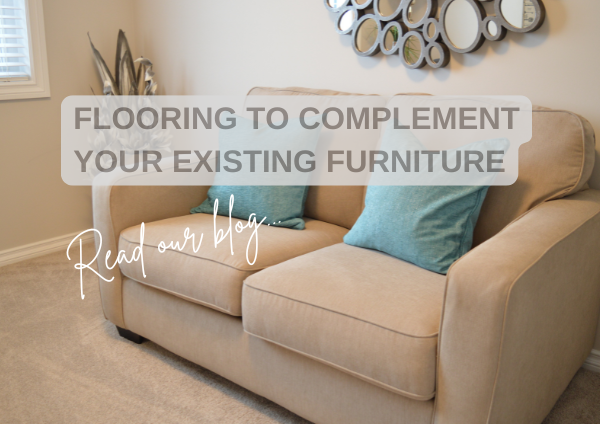
Beige and oatmeal: Warm, natural shades that work particularly well with wooden furniture.
Greys: A more contemporary option, particularly when paired with cooler colour schemes.
Taupe and brown: Useful for creating a warmer, more grounded feel.
Remember to think about how much use the room gets, too. A busy family lounge or staircase may need a different carpet choice from a spare bedroom.
LVT and wood effect flooring: creating a co-ordinated look
If you prefer the appearance of natural wood, LVT and wood-effect hard flooring offer plenty of choice.
From pale oak and natural timber shades to deeper walnut-inspired finishes, there are options to suit both modern and traditional interiors.
One of the advantages of wood-effect flooring is its versatility. It can work with wooden furniture, painted furniture, metal finishes and a variety of soft furnishings.
For a contemporary look, consider lighter oak tones with simple furniture and neutral accessories.
For something more traditional, deeper wood tones or a herringbone pattern can add character and create a more distinctive finish.
It's worth remembering that your floor doesn't have to be the same shade as your furniture. In fact, choosing slightly different wood tones can help prevent the room from looking too uniform. It's all about what flooring that complements your furniture, not what matches exactly.
Colour isn't the only thing that influences how flooring works with your furniture.
Texture and pattern can make a real difference, too.
A herringbone floor, for example, can add interest to a room without the need for lots of additional decoration. It works particularly well when the rest of the room is kept relatively simple.
If you have bold furniture or patterned soft furnishings, you may prefer a more understated floor.
On the other hand, a plain room can benefit from a more decorative flooring choice.
Think about the overall balance. If there are already lots of patterns and textures in the room, a simpler floor may be the better option.
Consider the size and light in your room
Your flooring can influence how spacious a room feels.
Lighter flooring can help create an airy appearance, particularly in smaller rooms or spaces that don't receive much natural light.Wider planks can also create a more open, less busy appearance, while the direction in which flooring is laid can influence the way the eye travels through the room.
That doesn't mean darker flooring should be avoided in smaller spaces. A deeper shade can create a cosy, welcoming atmosphere, especially when balanced with lighter walls and furnishings.
It's all about deciding what you want the room to feel like.
Always look at the sample in your own home
This is one of the most useful things you can do before making a final decision.
A flooring sample can look very different under the lighting in a showroom compared with the natural light in your own home.
Take samples home where possible and look at them alongside your furniture, curtains and wall colours.
Try viewing them at different times of the day, too. A colour that looks warm in the morning may appear quite different under artificial lighting in the evening - remember your looking for flooring that complements your furniture - not match it entirely, nor over power it.
The finishing touch that brings everything together
Choosing flooring isn't simply about finding something you like. It's about finding something that works with the rest of your room, suits your lifestyle and gives you a finish you'll be happy with for years to come.
Whether you choose a soft, neutral carpet, a natural-looking LVT or a hard floor with a distinctive pattern, the right choice can make all the difference.
If you're thinking about refreshing a room, pop into your local Karpet Kingdom and explore the different colours, textures and styles available.
Sometimes, changing the floor is all it takes to make the rest of the room come together!
